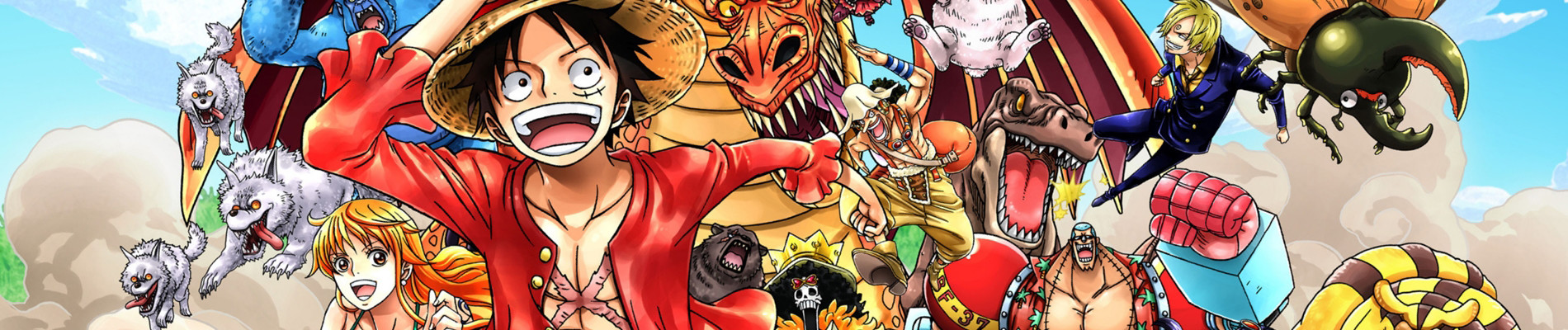
With over 20,000 anime titles in existence, knowing where to start — or where to go next — is genuinely hard. This guide cuts through the noise. For each major genre, we've picked the one or two series that best define it, explain why they work, and tell you exactly what to watch next after you finish them.
Use the anime browser to explore full rankings, or use description search if you half-remember something a friend recommended. Let's get into it.
Action — Spectacle That Earns It
Great action anime isn't just about animation quality — it's about the weight behind every fight. The best of the genre makes you care about the outcome before the first punch is thrown.
Demon Slayer: Kimetsu no Yaiba
Ufotable's animation redefined what a TV anime could look like. Tanjiro Kamado's journey to cure his demonified sister is built on a simple emotional foundation — family, loss, perseverance — but the execution is extraordinary. The Hinokami Kagura sequence in episode 19 remains one of the most jaw-dropping moments in modern anime. Start here if you want action anime that's immediately accessible without asking you to wade through a slow start.
Watch next: Jujutsu Kaisen — darker tone, similarly explosive action, and a protagonist who hides a genuinely terrifying power.
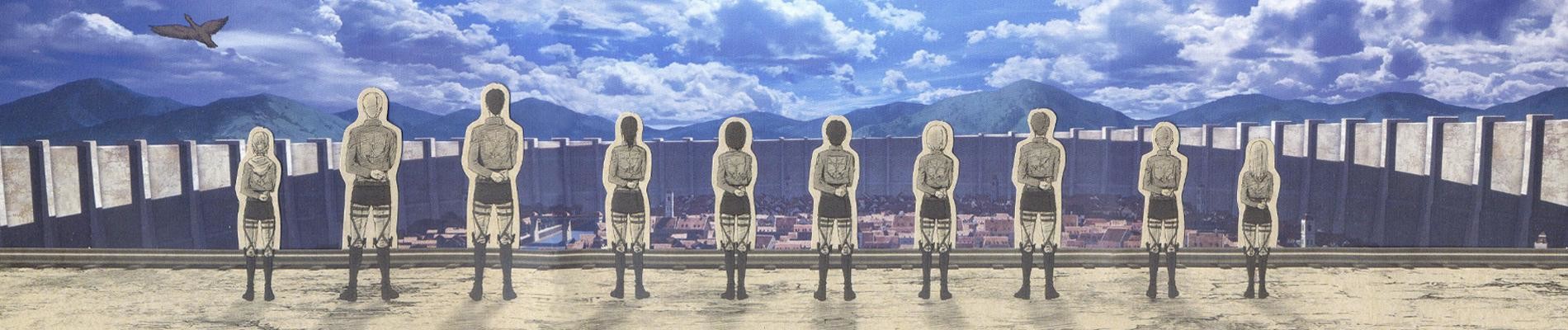
Attack on Titan
The action in Attack on Titan is almost secondary to the story it services. But when it hits — the ODM gear sequences, the basement reveal, the battle of Shiganshina — it hits harder than almost anything else in the medium. This is action anime as political thriller. Read our deep-dive on Attack on Titan's storytelling if you want to understand why it works on every level it does.
Isekai — Transported to Another World
Isekai gets a bad reputation because 90% of it is disposable. The 10% that isn't is genuinely some of the most creative world-building in anime. Here's where to find it.
Re:Zero — Starting Life in Another World
On the surface: a boy gets transported to a fantasy world. In practice: one of the most psychologically brutal anime ever made. Subaru Natsuki's ability to "Return by Death" — reset to a save point each time he dies — sounds convenient until you realize he retains the memory of every death. Re:Zero is an isekai that deconstructs isekai power fantasies brutally and honestly. Season 2 is exceptional.
No Game No Life
Polar opposite in tone — No Game No Life is vibrant, clever, and unashamedly fun. Sora and Shiro are genius shut-in siblings who get summoned to Disboard, a world where all conflict is resolved through games. The chess match in episode 1 sets the tone: every game is a psychological puzzle with high stakes. The art direction alone makes it worth watching.
Also worth your time: That Time I Got Reincarnated as a Slime — lighter stakes, excellent world-building, satisfying power progression.
Psychological Thriller — Mind Over Everything
The anime that keep you thinking for days after the credits roll. These are shows built on questions without clean answers.
Death Note
Light Yagami finds a notebook: write a name in it, that person dies. He decides to use it to purge the world of criminals. What follows is a 37-episode chess match between Light and L, the world's greatest detective, that never loses momentum. The first episode is one of the best pilots in anime history. Even viewers who know the ending watch it again to appreciate how every scene is constructed. If you've only seen it once, it rewards a rewatch.
Steins;Gate
A self-proclaimed mad scientist accidentally invents time travel using a microwave and a phone. The first half is a slow-burn comedy about a group of eccentric lab members. The second half is one of the most emotionally devastating things anime has ever produced. Steins;Gate is the rare series that earns every moment of its payoff because it spent so long making you care. Don't skip the slow first episodes — they're doing work you won't appreciate until later.
Romance — When Feelings Are the Plot
Romance anime lives or dies on the strength of its leads. Bad romance anime makes characters act inexplicably stupid to delay resolution. Great romance anime makes you feel the tension yourself.
Toradora!
Ryuji and Taiga are neighbors. He's a gentle giant who looks like a delinquent; she's a tiny girl with the temperament of a tiger. They agree to help each other confess to their respective crushes. Toradora is the gold standard of high school romance anime precisely because the romantic development is earned slowly over 25 episodes. The Christmas arc is sacred ground. Watch it without spoilers.
Your Lie in April
Arima Kousei was a piano prodigy who lost the ability to hear his own playing after his mother's death. Miyazono Kaori, a violinist, pulls him back into music and into life. Your Lie in April is devastating by design — you feel the ending coming from episode 3, and the show knows it. It uses that dramatic irony to make every happy scene more painful. One of the best anime soundtracks ever made, which is appropriate given the subject matter.
Sports — Competition as Character Development
Sports anime is not about sports. It's about what competition reveals about people. The genre consistently produces some of the most emotionally resonant anime of any era.
Haikyuu!!
Volleyball. That's the pitch. And yet Haikyuu!! is arguably the most consistently excellent long-running sports anime ever made. It works because it refuses to treat the opposing teams as obstacles — every rival team is as fully realized as the protagonists. Matches feel genuinely uncertain even when you're rooting hard for one side. The Karasuno vs. Shiratorizawa match in Season 3 is five episodes of pure escalation that deserves to be studied.
After Haikyuu!!: look into Ping Pong the Animation for the most unconventionally animated sports anime ever made, and Yowamushi Pedal if you want a cycling series with the same "nobody is a villain" ethos.
Sci-Fi — Ideas First
The best sci-fi anime uses speculative premises to explore ideas that realistic drama can't reach. These are shows that start with "what if" and follow it somewhere surprising.
Fullmetal Alchemist: Brotherhood
Two brothers attempt to use alchemy to resurrect their dead mother. They fail catastrophically — Edward loses his arm and leg; Alphonse loses his entire body and has his soul bound to a suit of armor. FMA:B is an adventure series on the surface and a philosophical argument underneath, wrestling with the nature of equivalent exchange, the cost of power, and what it means to be human. It's also one of the few 64-episode anime that doesn't have a single wasted episode. Consistently ranked as one of the greatest anime ever made, and it deserves every bit of it.
Dr. Stone
All of humanity is turned to stone simultaneously. Thousands of years later, genius teenager Senku awakens and begins rebuilding civilization from scratch using nothing but scientific knowledge. Dr. Stone is unique in that every "battle" is won through chemistry, physics, and engineering rather than combat. It's a love letter to human ingenuity. The Kingdom of Science vs. Tsukasa arc in Season 1 is brilliant because both sides have genuinely compelling arguments.
Shonen — Growing Up Through Adversity
Shonen is the backbone of the anime industry, and for good reason — the best examples of the genre are about growth, friendship, and the relentless refusal to give up.
Hunter x Hunter (2011)
Gon wants to become a Hunter — an elite licensed professional — to find his absent father. What starts as a classic shonen adventure gradually morphs into something far darker and more complex. The Chimera Ant arc is the most ambitious thing a mainstream shonen has ever attempted: a 60-episode meditation on what it means to be human, told through the lens of a war between humanity and a new apex predator. HxH's power system (Nen) is among the most cleverly designed in anime — fights are won through intelligence and preparation, not just raw power. Read our piece on long-running shonen storytelling for more context on what separates the best from the rest.
Slice of Life — The Beauty in the Ordinary
Slice of life anime resists easy summary because it's not about plot — it's about texture. Atmosphere, mood, the feeling of a specific time and place.
Clannad: After Story
Clannad's first season is a solid high school romance. After Story is a completely different category of anime. It follows Tomoya and Nagisa into adulthood — through their relationship, marriage, work, and everything that comes after. It is the most emotionally brutal depiction of adult life in anime. Some episodes are uncomfortable to watch not because of dramatic events but because they show ordinary life in a way that lands differently depending on where you are in yours. This is the anime people mean when they say "it destroyed me."
Comedy — Timing Is Everything
Comedy anime is the hardest genre to recommend because humor is personal. That said, these two are almost universally loved.
One Punch Man
Saitama trained so hard he became unbeatable. The joke: he's so strong that every fight ends in one punch, and he's completely bored by heroism. One Punch Man works as a parody of shonen tropes, as genuine action anime, and as a character study of someone who achieved his dream and found it hollow. Season 1 is a near-perfect 12 episodes.
Mob Psycho 100
From the same author as One Punch Man. Shigeo "Mob" Kageyama is a middle schooler with catastrophic psychic power who wants nothing more than to be liked by a girl in his class. Unlike Saitama, Mob grows — the show is fundamentally about emotional repression and what happens when you suppress your feelings for too long. The animation style is intentionally rough in a way that somehow makes the action sequences more impressive than polished alternatives.
Dark Fantasy — When the World Doesn't Play Fair
Dark fantasy anime takes high-concept worlds and refuses to let the protagonist be safe in them.
Tokyo Ghoul
Ken Kaneki is turned into a half-ghoul after a near-fatal encounter. He's forced into a world he didn't know existed, belonging completely to neither side. Season 1 is excellent, the white-haired Kaneki transformation arc in particular. The series becomes controversial after Season 1 — but that first cour is among the best in dark fantasy anime.
How to Find Anime You Can't Name
If a friend recommended something from this list and you only remember half the description — or if you have a screenshot from something you watched years ago and can't place — use our two finder tools:
- Find anime by screenshot — upload any episode frame and get the title in seconds
- Find anime by description — describe the plot, a character, or a scene in plain language
Both tools are free and don't require an account.
Where to Go From Here
Every series in this guide links to its full page on HappyAnime, where you can see the episode count, score, synopsis, trailer, and add it directly to your watchlist. Browse the full genre directory if you want to go deeper into any category listed here — each genre page is ranked by score and filtered by era.
If you finish everything in this guide, you'll have seen the canonical best of anime across a decade of production. Not a bad place to be.